Les Misérables — Victor Hugo
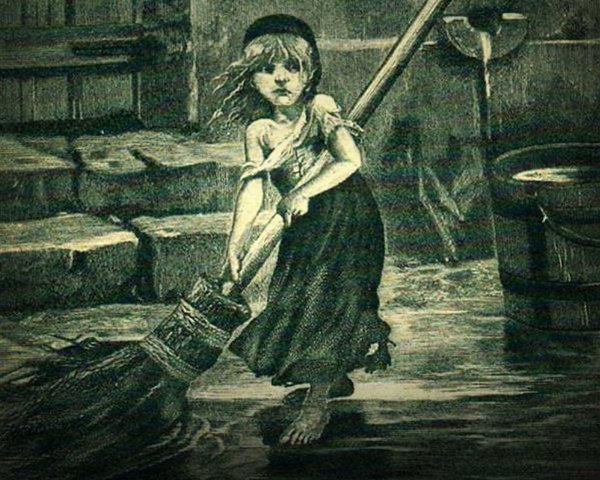
The story is about poverty, injustice, love, sacrifice, and the human struggle for redemption. The story begins with Jean Valjean, a poor man who steals bread to feed his family and is sent to prison. Years of imprisonment turn him into a bitter and angry man. After his release, society continues to treat him as a criminal, and nobody is willing to trust him. One day, a bishop treats him with unexpected kindness. When Jean Valjean steals the bishop’s silver, the bishop does not report him. Instead, he tells the police that the silver was a gift and even gives Jean Valjean more silver. This moment changes Jean Valjean’s life. He decides to leave his past behind and become a better man. Years later, under a new identity, Jean Valjean becomes a wealthy and respected man who helps the poor. However, Inspector Javert, a man who believes deeply in law and punishment, continues to search for him. Jean Valjean then meets Fantine, a poor and desperate woman who has a young daughter named Cosette. Fantine is suffering because of poverty and social cruelty. Before her death, she asks Jean Valjean to protect her daughter. Jean Valjean finds Cosette and takes care of her as if she were his own daughter. Years pass, and Cosette grows into a young woman who falls in love with Marius. Meanwhile, political unrest and rebellion spread through Paris. The city becomes filled with violence, fear, and chaos. Marius joins a group of young revolutionaries fighting behind the barricades. Jean Valjean enters this dangerous conflict, not because of politics, but because he wants to protect Marius, knowing that Cosette loves him. During the chaos, Jean Valjean saves Javert’s life, even though Javert has spent years pursuing him. This act destroys Javert’s understanding of the world because he cannot reconcile the idea of a former criminal with such an act of compassion and sacrifice. Marius survives, and he eventually marries Cosette. Jean Valjean reveals his past to Marius and chooses to distance himself from their lives. Later, Marius discovers the truth: Jean Valjean was the man who saved his life. He realizes that the man he had misunderstood was actually a deeply selfless person. Marius and Cosette return to Jean Valjean. After a lifetime of poverty, imprisonment, persecution, sacrifice, and loneliness, Jean Valjean dies peacefully with the people he loves beside him.
The Count of Monte Cristo — Alexandre Dumas
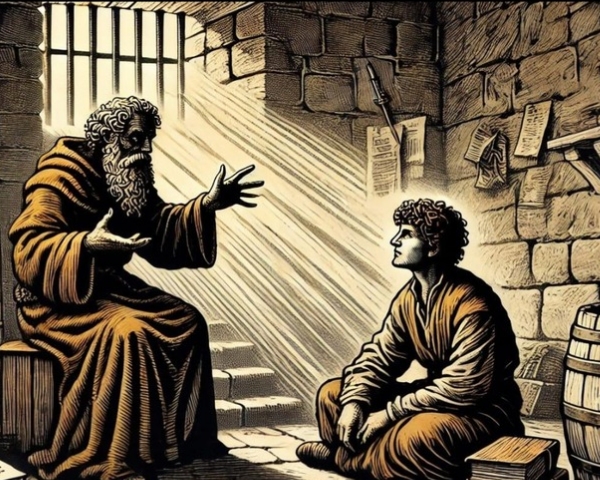
The story is about betrayal, injustice, revenge, identity, and the transformation of a human life. The story begins with Edmond Dantès, a young and successful sailor who is about to marry a woman named Mercédès. However, three men become jealous of him and create a false accusation, claiming that Edmond has political connections with France’s enemies. Without having committed any real crime, Edmond is arrested on his wedding day and sent to the terrible Château d’If. He spends many years in prison and gradually loses hope of ever being free. Inside the prison, he meets an old and highly educated man named Abbé Faria. Faria teaches Edmond many subjects and helps him understand who was responsible for his imprisonment. He also tells Edmond about the existence of a great hidden treasure on the island of Monte Cristo. After Faria dies, Edmond uses a clever plan to escape from prison. He eventually reaches the island of Monte Cristo and discovers the treasure. The young man who was once powerless and poor suddenly becomes extremely wealthy. Edmond returns to society under a new identity: the mysterious Count of Monte Cristo. He is no longer the simple and hopeful young man he once was. Years of imprisonment, loneliness, knowledge, and suffering have transformed him into a much more complicated person. He begins searching for the people who destroyed his life. They have now become wealthy and powerful men. Edmond gradually enters their lives and carefully begins exposing their past actions. At first, his revenge seems like a form of justice. He believes that he is simply making those responsible for his suffering pay for what they did. But as his plan continues, he realizes that revenge can also destroy innocent people. The plan he created so carefully begins to move beyond his control. Edmond discovers that punishment does not always bring justice, and destroying his enemies does not necessarily bring peace to himself. Eventually, he understands that a human being cannot always place himself in the position of absolute judge. He must choose between revenge and forgiveness. After years of living under the shadow of betrayal and revenge, Edmond begins to let go of his past and moves toward an uncertain future.
Norwegian Wood — Haruki Murakami

Norwegian Wood is a novel about love, loss, loneliness, memory, and the struggle to find meaning in life after tragedy. Set in Japan during the late 1960s, the story follows Toru Watanabe, a university student who looks back on his youth and the emotional experiences that shaped his understanding of love and death. When Toru is a teenager, his closest friend, Kizuki, dies by suicide. His death deeply affects Toru and Naoko, Kizuki’s girlfriend. Both struggle with their grief, and their shared memories bring them closer together. After meeting again several years later, Toru and Naoko develop an intimate emotional relationship. However, Naoko is unable to escape her psychological suffering and the painful memories of the past. Eventually, she leaves Tokyo and enters a secluded sanatorium in the countryside, hoping to recover. While Naoko is away, Toru meets Midori Kobayashi, an energetic, independent, and outspoken university student. Unlike Naoko, Midori approaches life with curiosity and humor, despite having experienced difficulties and losses of her own. She wants an honest relationship and encourages Toru to participate in the present rather than remain trapped in his memories. Toru becomes attracted to her, but his emotional attachment to Naoko prevents him from making a clear decision about his future.
Atonement — Ian McEwan

Atonement is a novel about love, guilt, imagination, betrayal, and the lifelong consequences of a single mistake. Set in England before and during the Second World War, the story follows Briony Tallis, a young girl whose misunderstanding changes the lives of her older sister, Cecilia, and Robbie Turner, the man Cecilia loves. The story begins at the Tallis family estate, where thirteen-year-old Briony witnesses several events involving Cecilia and Robbie. Because of her limited understanding of adult relationships and her powerful imagination, Briony misinterprets what she sees. Later, when a young girl is assaulted, Briony falsely accuses Robbie of the crime. Her testimony leads to Robbie’s arrest and imprisonment, destroying his relationship with Cecilia and separating the couple. As the years pass, Cecilia remains devoted to Robbie, while he struggles to rebuild his life. When the Second World War begins, Robbie joins the British Army and eventually finds himself fighting in France. Cecilia, who has become estranged from her family, continues to hope for a future with him. Meanwhile, Briony grows older and begins to understand the seriousness of her actions. Overwhelmed by guilt, she attempts to make amends for the suffering she has caused. She becomes a nurse during the war, hoping that confronting the consequences of human suffering will bring her closer to understanding her own responsibility. However, she gradually realizes that admitting the truth cannot necessarily undo the damage she has inflicted. The novel's final revelation complicates everything the reader has learned about Robbie and Cecilia. Briony, now an elderly novelist, reveals that she changed certain events in her written account. In reality, Robbie died during the war, and Cecilia died during the bombing of London. The reunion and happy future she gave them in her story never happened. Briony explains that she allowed the lovers to survive in her fiction because she could not bear to deny them the happiness she had helped destroy. Yet she understands that this fictional ending cannot truly compensate for her actions.
A Tale of Two Cities — Charles Dickens
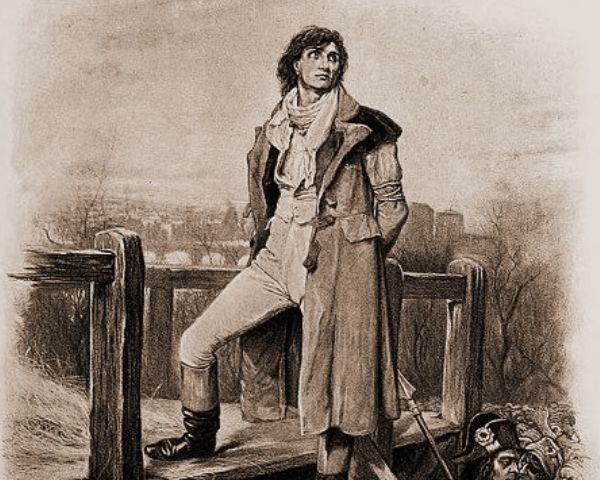
The novel is set in London and Paris during the years leading up to and throughout the French Revolution. It explores the themes of love, sacrifice, justice, revenge, and redemption against the background of a society divided by extreme inequality and political violence. The story begins with the release of Dr. Alexandre Manette, a French physician who has spent eighteen years imprisoned in the Bastille. After his release, he travels to London with his daughter, Lucie Manette, whom he has only recently reunited with. Lucie helps her father recover from the psychological suffering caused by his imprisonment and gradually rebuild his life. Meanwhile, Charles Darnay, a French aristocrat, is on trial in London, accused of treason. He is acquitted with the help of Sydney Carton, an intelligent but troubled English lawyer whose physical resemblance to Darnay plays an important role in the case. Although Carton possesses considerable talent, he feels disappointed in himself and believes that he has wasted his potential. Darnay and Carton represent two very different approaches to life. Darnay rejects the cruelty and injustice of his aristocratic family, while Carton struggles with his own failures and lack of purpose. Both men love Lucie, but she eventually marries Darnay. Carton accepts her decision and promises that he would do anything to help her or those she loves. Years later, the French Revolution begins, bringing violence and chaos to Paris. The revolutionaries seek revenge against the aristocracy for generations of oppression. Darnay returns to France to help a former servant who is in danger, but he is arrested because of his family background. Despite his personal rejection of aristocratic privilege, he is sentenced to death. Lucie and Dr. Manette travel to Paris in an attempt to save Darnay. Dr. Manette's history as a former prisoner initially gives him influence among the revolutionaries, but Darnay remains in danger. Eventually, the family discovers that Dr. Manette's imprisonment was connected to a terrible crime committed by Darnay's relatives against the family of Madame Defarge, a revolutionary determined to destroy the entire aristocratic family. As Darnay's execution approaches, Sydney Carton arrives in Paris. Recognizing that he looks almost identical to Darnay, Carton develops a plan to save him. He visits Darnay in prison, secretly exchanges places with him, and arranges for Darnay to escape with Lucie and their family. Carton remains behind, knowing that he will be executed in Darnay's place. In the novel's final moments, Carton faces death with a sense of peace and purpose that he has never experienced before. His sacrifice gives Lucie, Darnay, and their child the opportunity to live a new life. Although Carton dies, his final decision transforms his existence from one of regret into an act of extraordinary love and courage. Through Sydney Carton's sacrifice, Dickens suggests that a person's life is not defined only by past mistakes but also by the choices they make when faced with the possibility of doing something meaningful for others.
The Wasted Vigil — Nadeem Aslam

The novel is set in Afghanistan after the fall of the Taliban regime, in a country devastated by decades of war, political conflict, and foreign intervention. The story takes place mainly in a damaged house near the Afghan-Pakistani border, where several people from different backgrounds come together, each carrying painful memories and personal struggles. The central character is Marcus Caldwell, an English doctor who has lived in Afghanistan for many years. He once worked to help the local population and fell in love with an Afghan woman named Qatrina. However, war has destroyed much of the life he built. His wife and daughter have disappeared from his life, leaving him surrounded by memories of love, loss, and suffering. Marcus's house becomes a meeting place for several other characters, including Lara, a Russian woman searching for her missing brother, and David, an American who has become involved in the complicated political and military realities of Afghanistan. Their stories gradually reveal the devastating consequences of war and the way violence continues to shape people's identities long after the fighting has ended. As the characters share their experiences, the novel explores the relationships between personal grief, religious belief, political ideology, and the desire for revenge. Each character has experienced loss, but they respond to it differently. Some seek understanding and reconciliation, while others struggle with anger and the need to find someone to blame. Through these interconnected stories, Nadeem Aslam presents Afghanistan as a place where different cultures and historical forces collide. The novel examines how war destroys families, weakens trust, and transforms ordinary people into victims or participants in cycles of violence. Ultimately, The Wasted Vigil is a meditation on the human cost of war and the difficulty of preserving love, compassion, and moral responsibility in a world dominated by conflict. Its title suggests the painful possibility that years of waiting, suffering, and sacrifice may fail to bring the peace or justice that people desperately seek.
The Remains of the Day — Kazuo Ishiguro

The novel tells the story of Stevens, an English butler who has devoted his entire life to serving Lord Darlington, a wealthy aristocrat. Stevens believes that a great butler must demonstrate dignity, loyalty, professionalism, and complete control over his emotions. For him, personal feelings must always come second to professional duty. The story takes place in postwar England. Stevens decides to take a short journey through the countryside to visit Miss Kenton, a former housekeeper who once worked alongside him at Darlington Hall. During the journey, he reflects on his years of service and remembers the events that shaped his life. Through these memories, the reader learns that Lord Darlington was involved in political activities connected to Nazi Germany before and during the Second World War. Stevens had faithfully supported his employer without fully questioning his political decisions. Even when Lord Darlington made morally questionable choices, Stevens continued to believe that serving a distinguished gentleman was more important than making independent judgments. At the same time, Stevens's memories reveal his complicated relationship with Miss Kenton. She cared deeply for him and attempted to develop a closer emotional connection, but Stevens repeatedly suppressed his feelings because he believed that expressing love would be unprofessional. His dedication to duty gradually became a barrier between them, preventing him from acknowledging what he truly wanted. Stevens also struggles with memories of his father, who worked as a butler and died while Stevens was still serving at Darlington Hall. Even during his father's final hours, Stevens continued performing his professional duties, believing that maintaining his composure was more important than expressing his grief. When Stevens finally meets Miss Kenton again, he discovers that she has built a life with another man. Although she admits that she sometimes wonders what her life might have been like if she had made different choices, she intends to remain with her husband. Stevens realizes that the possibility of a relationship with her has largely disappeared. At the end of the novel, Stevens begins to question whether his lifelong devotion to service has cost him his own happiness and independence. He recognizes that he cannot change the past, but he considers making better use of the time that remains to him. Through Stevens's restrained narration, Kazuo Ishiguro explores how people can misunderstand their own lives by defending their past decisions and refusing to confront uncomfortable truths. Stevens does not necessarily lie to the reader; instead, his memories reveal the gap between the story he tells himself and the emotional reality of his experiences.